Your Outdoor Ceremony Just Got Rained Out. Here's the Photo Plan.
A calm, practical playbook for when the forecast turns — indoor alternatives, covered-entry portraits, umbrella technique, and when to move versus wait.
June 17, 2026 · 6 min read
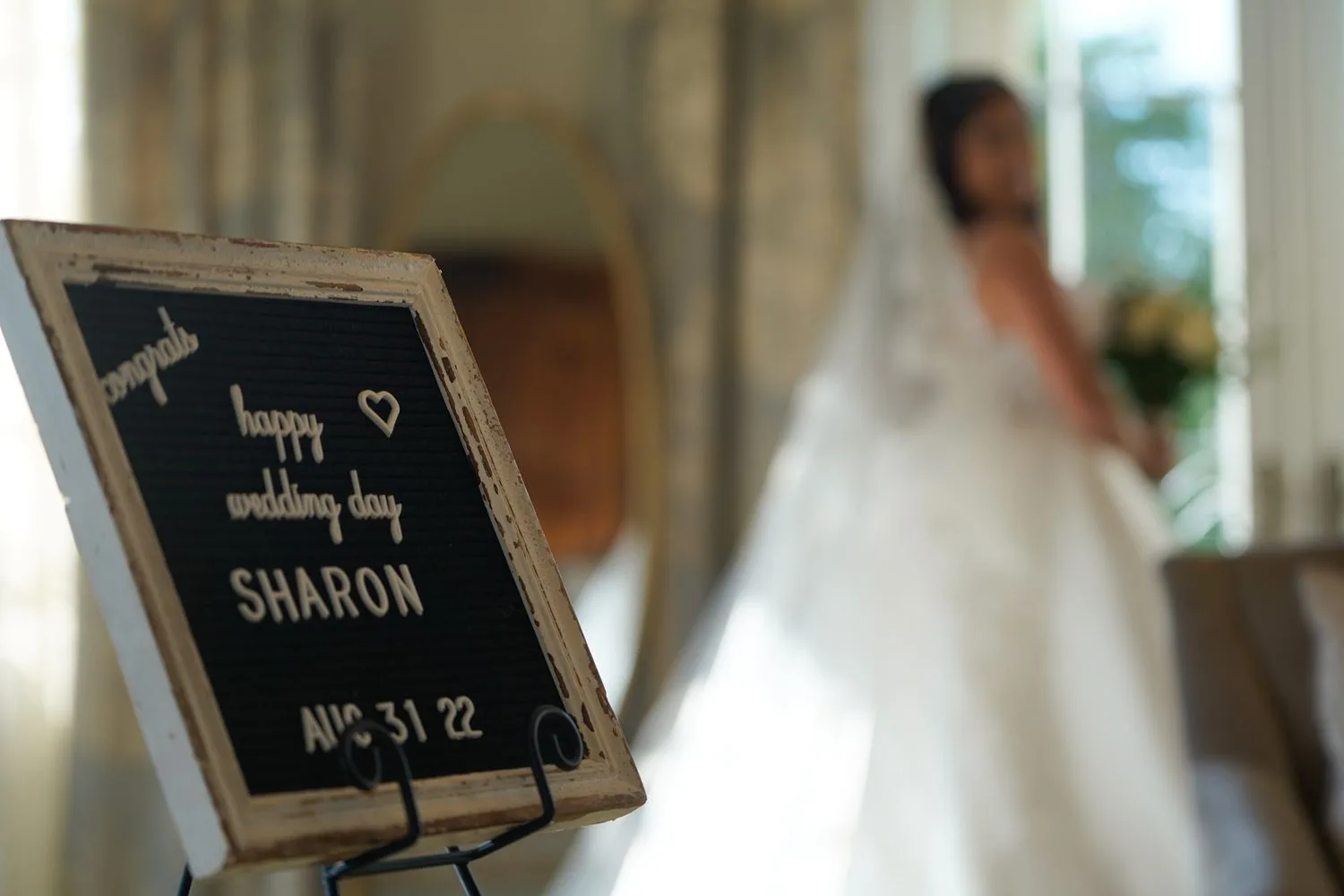
If rain moves your outdoor ceremony indoors, your photos are not ruined — soft, overcast light is some of the most flattering light there is, and a prepared team already has a plan. The move is simple: shift to the venue's best-covered spaces, use window and covered-entry light for portraits, and make the go/no-go call about 48 hours out. If you're mapping the whole day, our Bergen County timeline guide shows where a weather buffer fits.
First: breathe. Rain is not a photo problem.
The instinct when the forecast turns is panic, and it's worth naming why that's misplaced. Direct midday sun is actually the harder light to photograph in — it's contrasty and squint-inducing. An overcast, drizzly sky acts like a giant softbox: even, gentle, and forgiving on every skin tone. Some of the most atmospheric wedding photos we've made happened under grey skies. The day changes shape, but the pictures don't suffer for it.
Indoor alternatives by venue type
Where you go when the ceremony moves inside depends entirely on the kind of venue you booked. We scout these spaces on every walkthrough so we're never improvising:
- ●Ballroom venues — the ceremony flips to the same room as the reception or a secondary hall; we plan the flip and light the space so it doesn't read as a fallback.
- ●Estate and mansion venues — grand staircases, libraries, and window-lined parlors become portrait sets far prettier than a soggy lawn.
- ●Country clubs — covered verandas and clubhouse interiors give you both shelter and a view of the grounds through the glass.
- ●Restaurant and loft venues — big industrial windows are a gift; we position portraits right into that soft, directional light.
Covered-entry portraits: your rainy-day studio
The single most useful spot on a rainy wedding day is the covered entrance — a portico, a porte-cochère, a deep doorway, or an awning. Standing just inside that cover, you're sheltered while the open sky in front of you supplies beautiful, wraparound light. We place couples right at the threshold, dry but lit like they're outdoors. It's the technique that quietly saves most rainy-day portrait sessions, and almost every Bergen County venue has one.
Umbrellas and window light: making rain the look
If you're willing to step out under cover of an umbrella — a clear one is best, since it lets light through and shows your faces — rain becomes a deliberate aesthetic rather than a compromise. Wet pavement turns into a mirror for lights, and a single umbrella creates an intimate, cinematic frame. Indoors, we lean on window light: positioning you beside a large window gives soft, directional portraits with real depth. Both approaches turn the weather into part of the story instead of something to hide.
Couples brace for rain and then fall in love with the umbrella frames — grey skies make quiet, cinematic pictures.
— Maximus Visions
Protecting the details and the getting-ready
Rain rarely touches the parts of the day that happen indoors anyway. The morning details — dress, rings, invitation, shoes — and the getting-ready coverage are unaffected by weather, so a smart timeline leans into them when the forecast is grim. We'll often expand the detail and preparation window slightly on a rainy morning, buying more of the calm, story-setting frames while we wait to see whether a dry window opens later. It's a quiet way to make sure the gallery stays full regardless of what the sky does.
Move or wait? Reading the radar
Not every forecast means abandoning the outdoor plan. The real question is whether the rain is steady or passing. For a fast-moving cell, it's often worth holding the outdoor ceremony and building a short buffer to let a shower pass — a fifteen-minute delay can hand you a dramatic post-rain sky. For all-day steady rain, commit to the indoor plan early and stop watching the radar; a confident, well-lit indoor ceremony beats a damp, hesitant outdoor one. We help make that read on the day itself.
The 48-hour decision timeline
Most venues need a decision on ceremony setup a day or two ahead, so the outdoor-vs-indoor call usually lands around the 48-hour mark. Here's how we approach it:
- 1.72 hours out — start watching the forecast together, but don't act on it yet; forecasts this far out shift constantly.
- 2.48 hours out — make the primary call with your coordinator so the setup crew can plan; lock the indoor layout if rain is likely.
- 3.24 hours out — confirm and finalize; adjust the photo timeline to protect any window of dry light.
- 4.Wedding morning — a final radar check for move-vs-wait timing on a passing shower, then commit and enjoy the day.
A rain plan is something we bring to every wedding by default — scouted covered spots, umbrella frames ready, and a timeline that can flex. It's part of how we cover the day on our wedding photography service, and it's especially worth planning around the venues we know in Paramus and across the county. When you're ready, tell us about your day and we'll build the weather contingency in from the start.
Frequently asked
Will rain actually ruin our wedding photos?
No. Overcast, rainy skies act like a giant softbox, giving even, flattering light that's easier to work with than harsh midday sun. With covered-entry portraits, window light, and umbrella frames, a rainy day often produces some of the most atmospheric images of the wedding.
Where do you take portraits if it's raining at our venue?
We use the covered entrance — a portico, awning, or deep doorway — where you stay dry while open sky supplies soft light. Indoors, we position portraits beside large windows and use grand staircases, libraries, or verandas depending on the venue type.
Should we delay an outdoor ceremony or move it inside when rain threatens?
It depends on the radar. For a fast-moving shower, a short fifteen-minute buffer can let it pass and hand you a dramatic post-rain sky. For steady all-day rain, commit to the indoor plan early — a confident indoor ceremony beats a damp, hesitant outdoor one.
When do we have to decide between the outdoor and indoor setup?
Usually around 48 hours out, since venues need time to plan the setup. We start watching the forecast about 72 hours ahead, make the primary call at 48 hours with your coordinator, confirm at 24 hours, and do a final radar check on the wedding morning.